A fawn alone in the grass is usually not an orphan
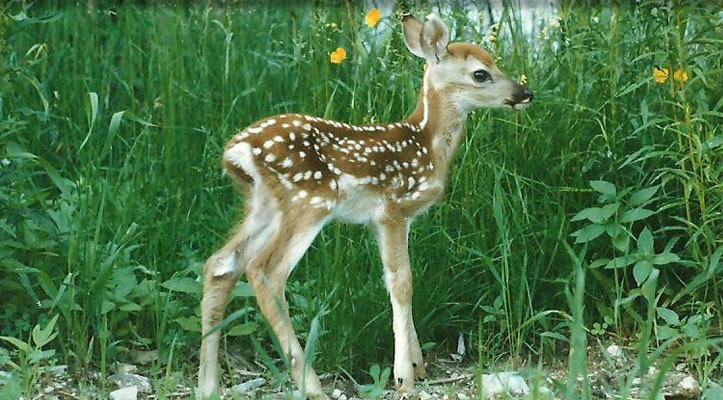
Does leave their fawns lying still for hours at a time. It is the fawn's best defence, and picking one up usually makes things worse.
Every spring, people find a fawn curled up alone at the edge of a field or against a stone wall and assume something has gone wrong. Almost always, nothing has.
A doe cannot hide herself, so she hides the fawn instead. She leaves it lying still somewhere sheltered and returns only a few times a day to feed it, because her presence is what would draw attention. A fawn on its own for eight hours is a fawn whose mother is doing her job.
What normal looks like
Curled up, quiet, ears relaxed, lying still even when approached. Spotted coat, clean, no flies. Fawns have very little scent of their own, which is the other half of the defence.
When something is actually wrong
- An obvious injury, bleeding, or a limb that is not being used.
- Flies or maggots around the eyes, nose or a wound.
- Crying continuously and wandering in the open rather than staying put.
- Lying on its side, cold, or limp rather than curled and alert.
- A dead doe nearby.
If you are not sure
Leave the fawn where it is, take the dog indoors, keep children away, and watch from a distance or from a window for several hours. Then telephone before doing anything else — a licensed wildlife rehabilitator or a veterinary practice can tell you from a description whether this is a fawn that needs help or one that needs to be left alone.
Do not offer food or milk. Cow's milk in particular is a common and serious mistake, and a fawn that has been fed the wrong thing arrives in far worse shape than one that has simply been left. Handling also carries a risk in the other direction: young wildlife can carry disease, and in some places moving an animal is regulated regardless of intent.
The best outcome for a healthy fawn is the one where nobody touches it at all.